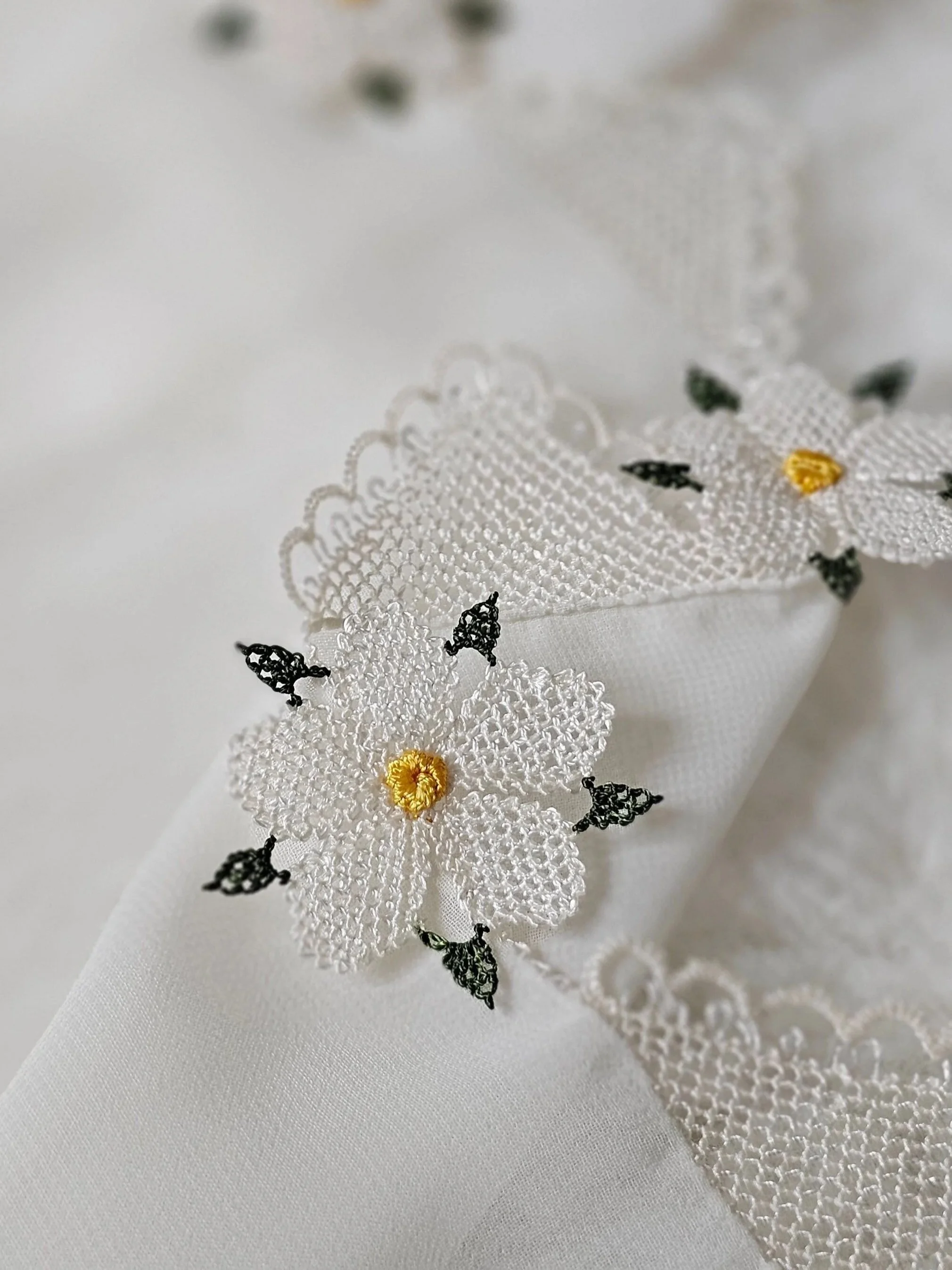
İğne oyası (Turkish)
A traditional form of lace-making, unique to Turkiye, distinguished by its delicate, intricate forms. Made using just a fine needle and a single thread, it is created through small, carefully formed knots and loops. Flowers, leaves and other motifs inspired by nature are among its most recognisable designs. Traditionally used to adorn headscarves and textiles prepared for a bride’s dowry.
NEEDLE LACE
/ˈniː.dəl leɪs/ · noun
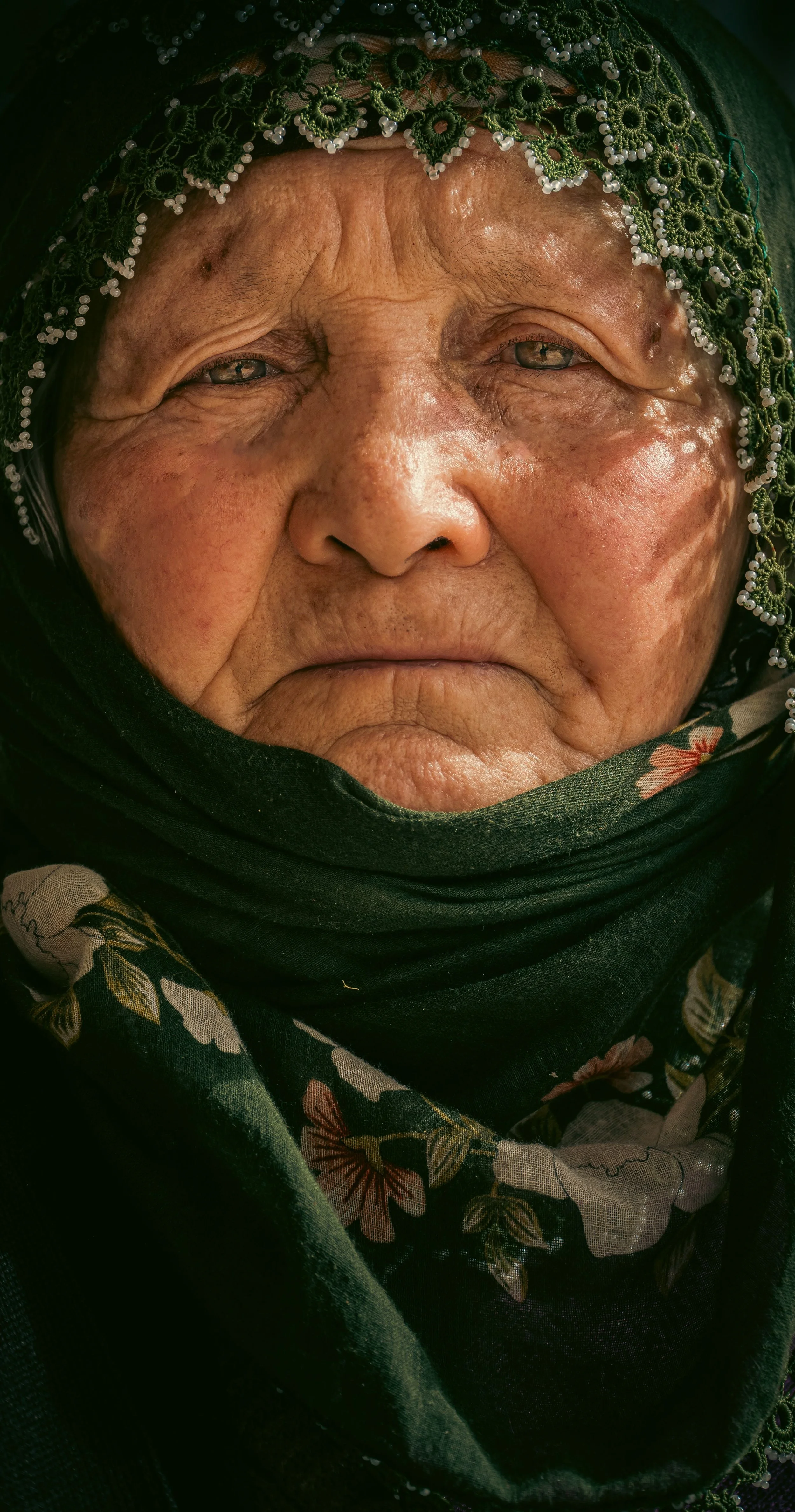
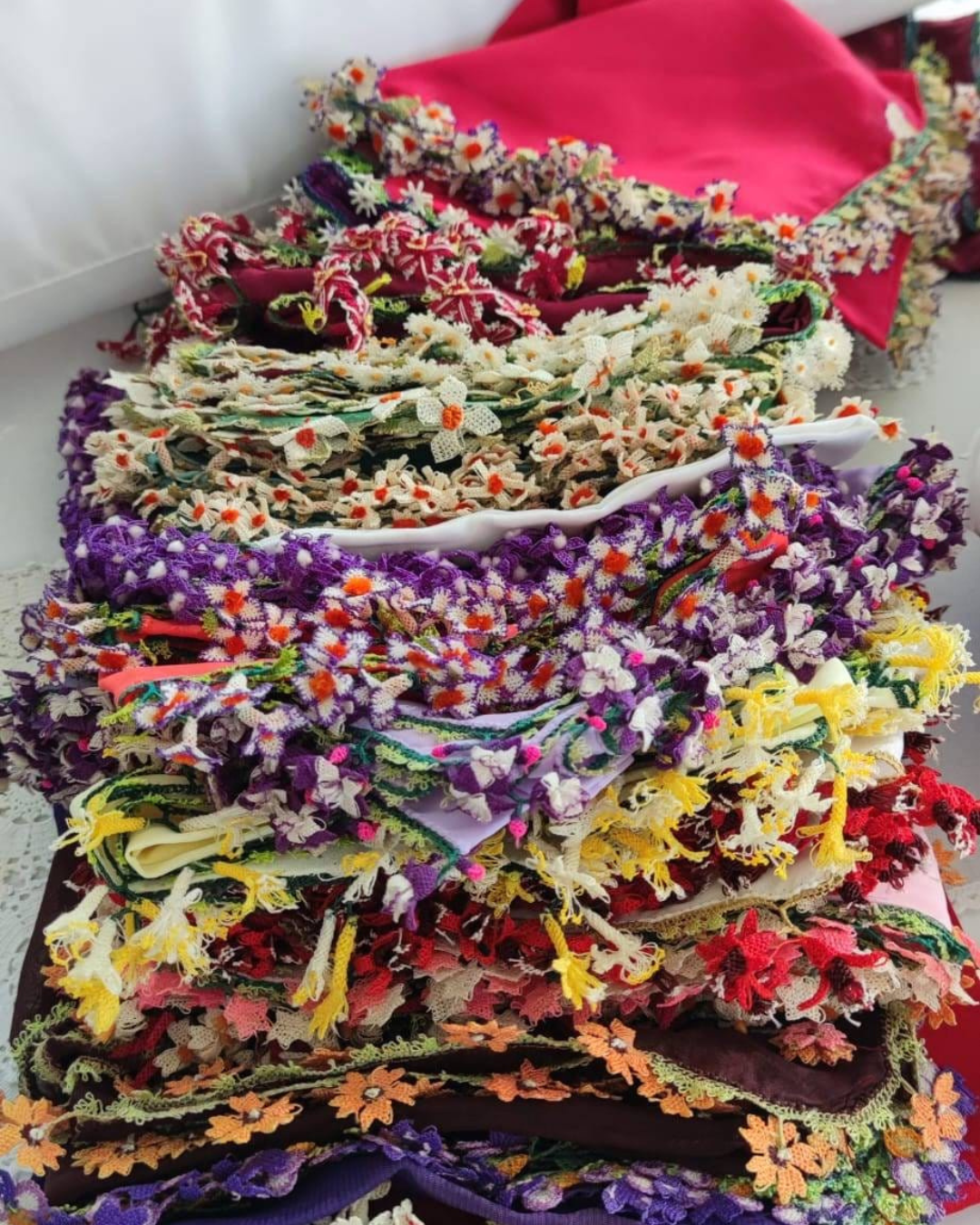
Deeply rooted in Anatolian textile traditions, needle lace has been practised by generations of women across Türkiye. Its precise origins are difficult to establish, but the craft developed into a distinctive part of Turkish needlework, with techniques and designs varying across regions. Knowledge and skills have traditionally been passed down from one generation to the next.
Needle lace holds a special place in the cultural heritage of Anatolian women. It was an important part of the çeyiz, the traditional dowry prepared for marriage, where handmade textiles were carefully collected and preserved. Motifs and colours reflected local traditions and personal expression, and sometimes carried symbolic meanings. Through their work, women found a way to express creativity and individuality.
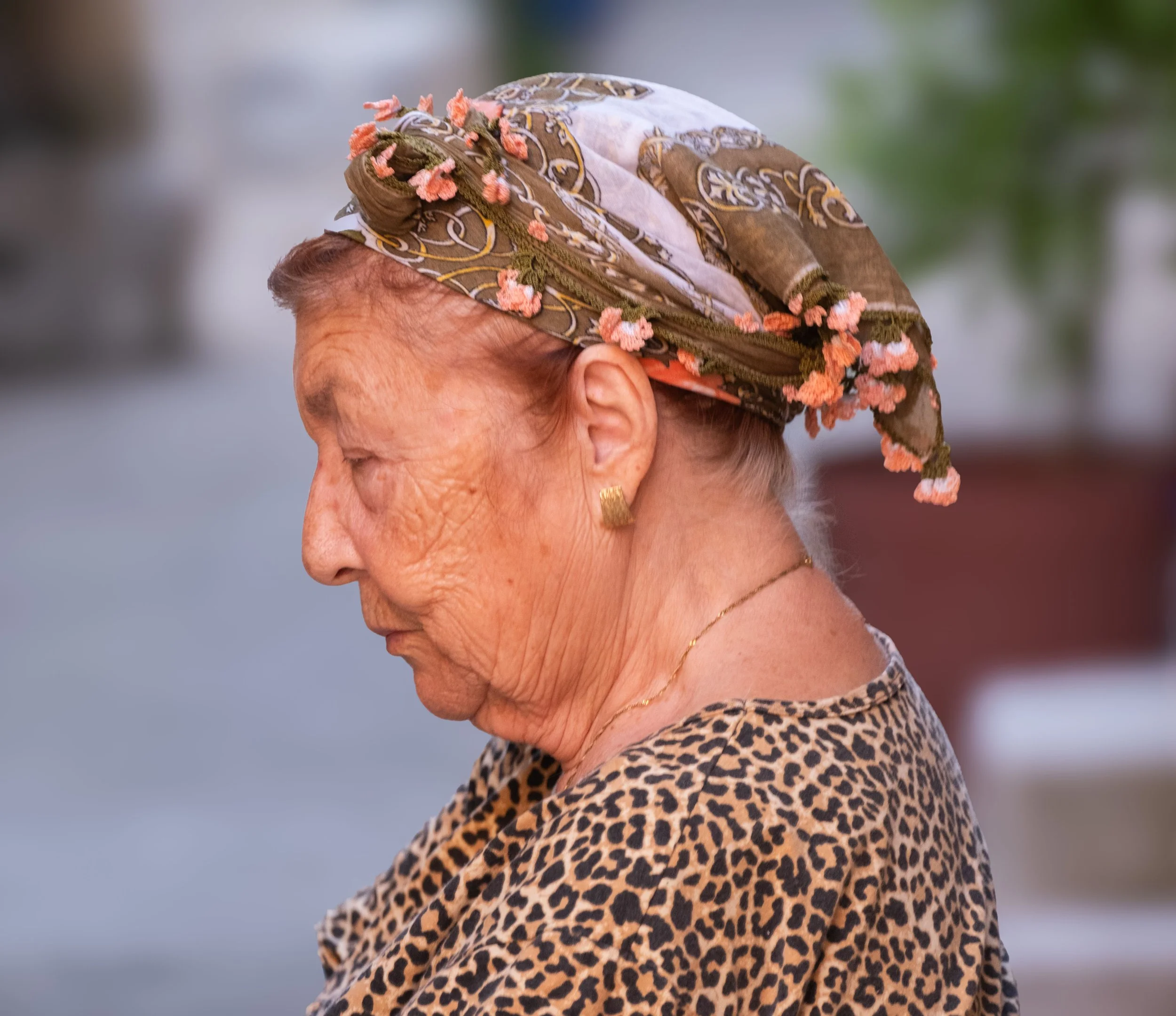
Traditionally, needle lace had a place in everyday life, often the main decoration for headscarves, garments and household textiles. It was particularly associated with the yazma, a traditional printed headscarf. The edges would be finished with a flat version of needle lace often with colourful flowers on a green base. Towels, table linens and other household pieces were also adorned with these intricate details, often representing many hours of work.
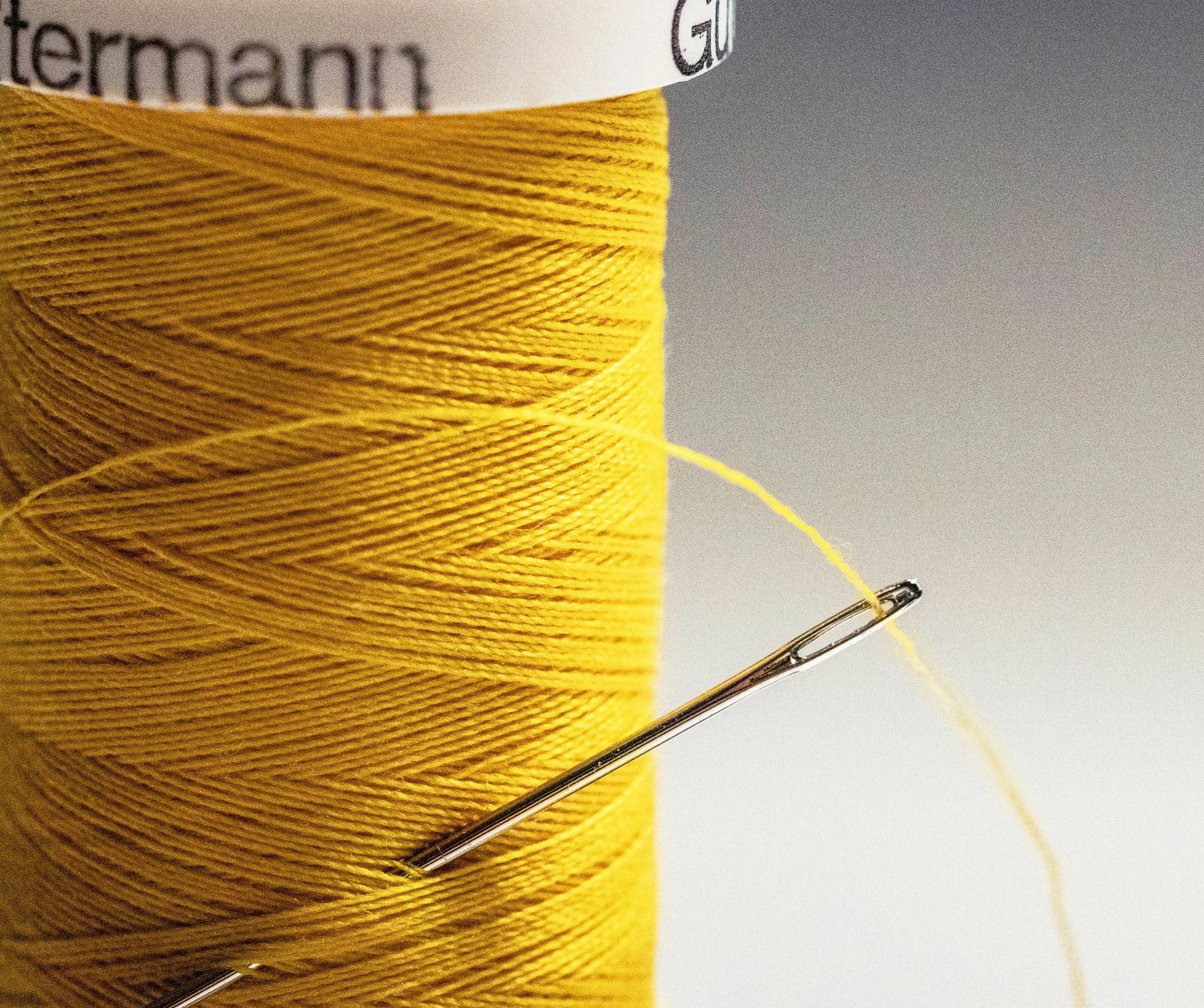
Unlike many other forms of lace-making, needle lace requires no specialised equipment, just a lot of patience. Using only a fine needle and thread, the maker forms small, interlocking knots and loops, building the lace stitch by stitch. By varying the arrangement of these stitches, intricate motifs and three-dimensional shapes gradually emerge. The process requires precision, patience and considerable skill.
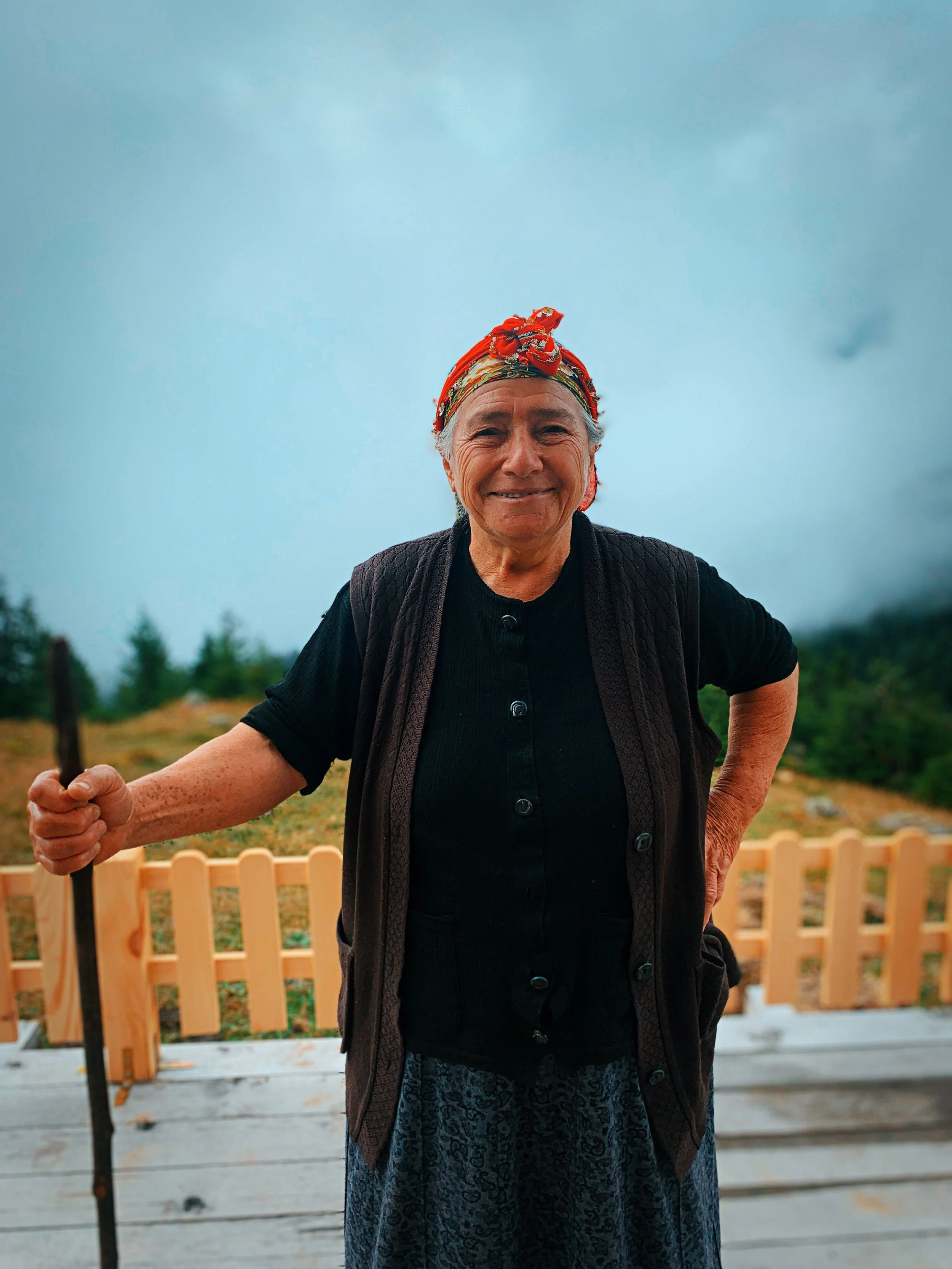
Needle lace continues to evolve beyond its traditional uses. Once primarily found on headscarves and household textiles, it is now being reinterpreted in contemporary designs as trims or jewellery. Despite dwindling number of women who practice lacemaking, there is hope that the renewed interest and more modern interpretations will help preserve this special craft. Working with women artisans, we at Elerin aim to support the continuation this heritage skill shaped by generations of creative women.